Posts

Showing posts with the label DevOpsCourseinHyderabad

DevOps vs. CI/CD: Understanding the Key Differences

Image
DevOps and CI/CD , have emerged as powerful tools to streamline development and delivery. However, understanding the distinction between them is crucial for optimal  implementation . While both aim to accelerate software delivery, they operate on different levels. This article explores the core differences between DevOps and CI/CD, examining their purposes, benefits, and how they work together to create a robust development pipeline. Unveiling DevOps : A Cultural Transformation DevOps is more than just a set of practices; it's a cultural shift that fosters collaboration and breaks down silos between development (Dev) and operations (Ops) teams. Traditionally, these teams worked independently, causing bottlenecks and sluggish deployments. DevOps bridges this gap by promoting shared responsibility for the entire software lifecycle, encompassing everything from planning and coding to deployment and monitoring. Key components of the DevOps culture include the following: Collaboration: ...

DevOps: Reducing Risk and Improving Reliability

Image
  DevOps  emerges as a sturdy fortress within this jungle, fostering a culture of collaboration and continuous improvement.  By bridging the gap between development ( Dev ) and operations (Ops) teams, DevOps empowers organizations to build resilient and reliable software delivery pipelines, significantly reducing risk and ensuring consistent software performance. This  article  delves into how DevOps practices mitigate risk and enhance reliability throughout the software development lifecycle. We'll explore key benefits, core practices, and the cultural shift DevOps necessitates to create a truly robust development environment. Why Risk Reduction Matters in DevOps Software development inherently involves risk. Bugs, security vulnerabilities, and infrastructure issues can lead to costly downtime, user dissatisfaction, and reputational damage. Traditional workflows, with infrequent deployments and limited communication, exacerbate these risks. Here's how DevOps ta...
Image
DevOps . The term itself evokes images of streamlined efficiency, rapid software delivery, and a harmonious  collaboration  between developers and operations teams. But what exactly is DevOps? Is it just a fancy buzzword, or is there something more profound at play? DevOps is, in essence, a cultural shift within the  software  development landscape. It's a philosophy that emphasizes breaking down silos between development and operations, fostering a spirit of collaboration, and leveraging automation to achieve faster, more reliable software delivery. It's not simply a set of tools, although tools do play a crucial role. It's a holistic approach that encompasses people, processes, and practices. The Historical Divide: Development vs. Operations Traditionally, software development and operations existed in separate worlds. Developers focused on writing code, while operations handled deployment, infrastructure management, and troubleshooting. This siloed approach often ...

Learn to become a DevOps Engineer

Image
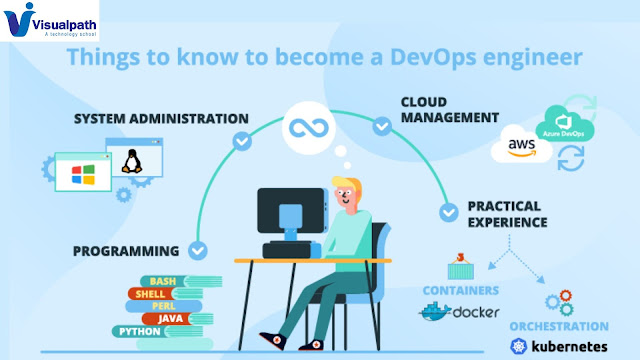
The world of software  development  is a fast-paced one, with an ever-growing emphasis on agility and efficiency. This is where DevOps engineers come in, acting as the crucial bridge between development and operations teams. For those  interested  in a career that blends technical expertise with collaboration and problem-solving,  DevOps  offers a compelling path. But how exactly does one become a DevOps engineer? This comprehensive guide will equip you with the knowledge and steps you need to embark on this exciting journey. Understanding the DevOps Philosophy DevOps is more than just a job title; it's a philosophy that emphasizes collaboration and automation to streamline the software delivery process. It breaks down the traditional silos between development and operations, fostering a culture of shared responsibility and continuous improvement.   -DevOps Training Here are some core principles of DevOps: Collaboration:  DevOps engineers work clo...

Top 5 DevOps Automation Hacks to Speed Up Development

Image
  Today's  software  landscape demands rapid feature delivery. Traditional workflows, however, are sluggish. By utilizing automation to expedite development and optimize workflows,  DevOps  unites development and operations. This blog explores five key DevOps automation hacks: 1.  CI/CD : Streamlined Delivery Continuous Integration (CI):  Every code commit triggers an automated build process. This builds the application, runs unit tests, and verifies code quality, catching errors immediately. Continuous Delivery (CD):  Upon successful build and tests, the code is automatically deployed to a staging environment for thorough testing before production release. Benefits: Faster Feedback Loops:  Developers receive instant feedback on their code, allowing for early bug fixing.  -DevOps Training Reduced Integration Issues:  Frequent code integration minimizes major integration problems later in the cycle. More Frequent Deployments:  C...